|
||||||||||||||||
|
|
|
|
||||||||||||||
|
THOMAS
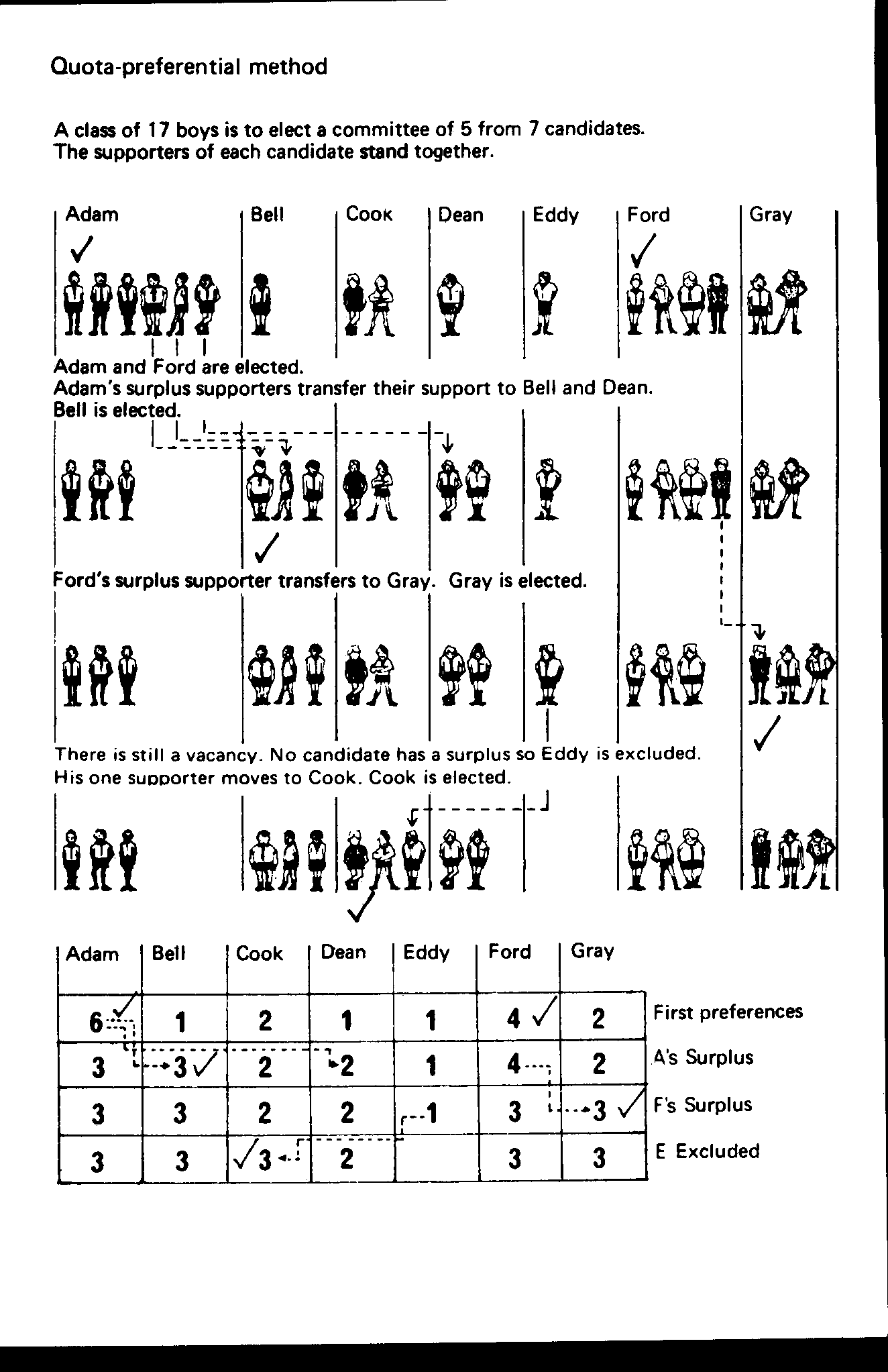
HILL’S PROPORTIONAL REPRESENTATION ELECTION FOR SCHOOLBOYS c. 1820
With 17 boys voting to |
||||||||||||||||
| To print the graphic below at the right size to fill an A4 page, click on it with your right hand mouse button & save the file, tom_hill.gif, to your hard drive. Then open it & print it. | ||||||||||||||||
|
|
||||||||||||||||
|
In this case, every boy could see
how the others voted. It was shown later by Thomas Hare in England and
Carl Andrae in Denmark that the same method could be used with secret
voting. Voters can show by preference markings on ballot papers which
candidates they support and where they would transfer their support is
it was not needed by their first-preference candidates. Instead of the
boys grouping themselves in support of candidates and eventually
arranging themselves in quotas, the ballot papers would be examined and
the counting carried out as shown above. Each
stage of counting
corresponds exactly to one stage in the schoolboys' election.
Each voter had a wide choice of candidates and bodies of opinion are represented by spokesment in numbers proportional to the numbers supporting them, since each candidate elected is supported by a quota of voters. This method has been developed for use in elections of all sizes, and several refinements have been introduced to make it as accurate and effective as possible. For example in transferring Adam's surplus, it is not necessary to make and arbitrary selection of 3 of the ballot papers showing Adam as first preference. It is better to examine all of them and to find which candidates the voters have shown as second preferences. The surplus of 3 will be carried by the 6 papers so each is given a 'transfer value' of ½. Each of the unelected candidates is then credted with the papers showing him as second preference, each with a value of ½. The method can be used to fill any number of vacancies. In each instance, the quota is calculated so that it is possible to form a number of quotas equal to the number of vacancies but no more than this. It is foundby dividing the number of formal votes by the next whole number above the number of vacancies, and taking the next whole number above the result of the division. For example, in an election with 40,000 votes to fill 7 vacancies, the result of dividing 40,000 by 8 is 5,000 and the quota is 5,001. If 7 candidates each have 5,001 votes, totalling 35,007, there are only 4,993 votes remaining. So only 7 quotas of 5,001 can be formed and this is the smallest number that gives this result. It can be left to the voters to decide how many preferences they wish to indicate. There is no need to compel them to indicate preferences for all candidates. |
||||||||||||||||
 |
|
|
||||||||||||||